

Stonehenge at Sunrise: Is It Worth the Early Start? (2026 Guide)
8th June 2026
🌄 Stonehenge at Sunrise: Is It Worth the Early Start? (2026 Guide)

Sunrise transforms Stonehenge with softer light, quieter surroundings and some of the most atmospheric views of the monument
For many visitors, a trip to Stonehenge begins with a simple question.
What is the best way to experience one of Britain’s most famous prehistoric monuments?
Some travellers choose a traditional daytime visit.
Others prefer sunset tours, Inner Circle access or even the annual Summer Solstice celebrations.
Yet one option continues to attract photographers, history enthusiasts and early risers from around the world:
Stonehenge at sunrise.
Watching the first rays of sunlight gradually illuminate the ancient stones can feel remarkably different from visiting later in the day. The landscape is quieter. Visitor numbers are lower. The atmosphere often feels more reflective and connected to the surrounding countryside.
For many travellers, sunrise becomes the moment they remember most.
Years later, it is often the sunrise itself—not the journey—that remains fixed in memory.
It is not necessarily the easiest way to visit, but it can be one of the most atmospheric.
However, there is one obvious challenge.
The early start.
Depending on the season, some tours require departures long before most people would normally consider getting out of bed.
So is it actually worth it?
This guide explores what a Stonehenge sunrise experience is really like, who it suits best and whether the rewards justify the alarm clock.
Many visitors comparing timings may also find it useful to review the complete Stonehenge tours guide, which compares different tour styles, departure options and planning advice for first-time visitors.
🌅 What Is A Stonehenge Sunrise Tour?
Long before the visitor centre becomes busy and large daytime crowds begin arriving, sunrise visitors are already making their way across Salisbury Plain.
A sunrise tour is exactly what the name suggests.
Instead of arriving during standard daytime visiting hours, travellers reach Stonehenge before or shortly after dawn to witness the monument as the landscape wakes around it.
Depending on the time of year, departures can be very early.
Summer sunrise tours may require leaving London during the early hours of the morning, while winter departures are often more forgiving due to later sunrise times.
The exact timing depends heavily on the season. In summer, sunrise can require a very early departure, while winter sunrise visits may allow a more manageable start. This is one reason sunrise tours feel very different depending on when you travel.
The appeal is not simply seeing Stonehenge.
It is experiencing Stonehenge at a moment when conditions feel completely different.
The surrounding countryside remains quiet.
Birdsong replaces coach engines.
The changing light gradually reveals details within the stones that can be surprisingly easy to miss later in the day.
Many visitors describe sunrise as the most peaceful time they have ever seen Stonehenge.
Unlike some attractions that feel largely the same throughout the day, timing genuinely changes the experience here.
Visitors still deciding between morning and evening light may also want to compare Stonehenge sunrise tours vs sunset tours before choosing the experience that best matches their travel style.
🌄 What Makes Sunrise At Stonehenge So Special?
There is a reason so many photographers, history enthusiasts and repeat visitors speak enthusiastically about sunrise experiences.
The atmosphere.
As darkness slowly fades, the monument appears to emerge naturally from the landscape.
Shadows stretch across the grass.
Colours shift minute by minute.
The stones often seem more dramatic and mysterious than they do during the middle of the day.
Unlike busy afternoon periods, there is usually a stronger sense of anticipation.
Visitors are not simply arriving to tick Stonehenge off a sightseeing list.
They are arriving to witness a particular moment.
Many travellers describe sunrise as the time when Stonehenge feels most connected to its landscape.
There is a sense of anticipation that simply does not exist later in the day.
Many visitors describe sunrise as the moment Stonehenge feels most timeless.
Without the distractions of peak visitor numbers, it becomes easier to appreciate the monument’s position within the wider World Heritage Site and understand why this location has fascinated people for thousands of years.
Benefits often include:
✅ A quieter atmosphere
✅ Cooler temperatures
✅ Softer natural lighting
✅ Greater sense of occasion
✅ Stronger emotional connection
✅ Less distraction from crowds
For visitors who value atmosphere over convenience, sunrise frequently becomes the preferred option.
👥 Are There Fewer Crowds At Sunrise?
One of the biggest advantages of a sunrise visit is the reduction in visitor numbers.
While Stonehenge remains one of Britain’s most popular attractions, relatively few visitors are willing to leave before dawn.
This naturally creates a calmer experience.
Benefits can include:
• Easier movement around viewing areas
• Better photography opportunities
• Less background distraction
• More personal space
• Greater ability to appreciate details
The difference becomes particularly noticeable during spring and summer when daytime visitor numbers can increase significantly.
The difference is often most noticeable during school holidays and peak summer periods when daytime visitor numbers are at their highest.
Visitors seeking a quieter experience often discover that timing matters just as much as the type of tour they choose.
For travellers who dislike crowds but still want to experience Stonehenge at one of its most atmospheric moments, sunrise can offer an excellent balance between accessibility and tranquillity.

Sunrise provides some of the best photography conditions at Stonehenge, with softer light, longer shadows and fewer visitors.
📸 Is Sunrise Better For Photography?
For many visitors, photography becomes one of the biggest reasons for choosing a sunrise experience.
Stonehenge can look dramatically different depending on the time of day, weather conditions and season.
Sunrise often provides some of the most favourable photography conditions available.
As the sun rises above the horizon, the lower angle of the light helps reveal textures within the stones while creating longer, softer shadows across the landscape.
Photographers frequently appreciate:
📸 Softer natural light
📸 More balanced exposure
📸 Morning mist opportunities
📸 Rich golden tones
📸 Cleaner compositions
📸 Fewer visitors in photographs
Many photographers consider sunrise the moment when Stonehenge feels most timeless.
The combination of changing light and reduced visitor numbers can create images that feel very different from standard daytime photography.
Weather conditions can also add to the atmosphere.
Light mist drifting across Salisbury Plain occasionally creates some of the most memorable Stonehenge photographs of the year.
Of course, sunrise conditions are never guaranteed. Cloud, rain or mist can change the view dramatically, but even imperfect weather can create atmospheric images if visitors arrive prepared.
Professional photographers often favour sunrise for cleaner compositions, while travel photographers frequently favour sunset for dramatic colours.
Even visitors using smartphones often notice a significant improvement in image quality compared with midday conditions.
Neither is automatically better.
They simply create different styles of imagery.
Visitors hoping to maximise photography opportunities may also find it useful to review dedicated Stonehenge photography advice before travelling.
Travellers seeking specialist photography-focused experiences may also wish to explore dedicated Stonehenge photography tours.
📸 Want Better Stonehenge Photos?
One of the biggest advantages of visiting Stonehenge at sunrise is the photography opportunity. Softer light, longer shadows and quieter viewing areas can dramatically improve the quality of your images.
📸 Best Photography Times → Learn when conditions are at their most rewarding
🌤 Weather & Lighting Tips → Understand how changing conditions affect your photos
📍 Viewing Areas & Angles → Discover practical ways to improve your compositions
The right timing, weather conditions and viewpoints can dramatically improve your Stonehenge photographs. A little preparation before your visit can make a significant difference.
📸 Improve Your Stonehenge Photography
Discover practical photography tips, seasonal advice and the best times to capture Stonehenge at its most atmospheric.
🌤 Does Sunrise Feel Different Throughout The Year?
The experience of visiting Stonehenge at sunrise changes considerably throughout the seasons.
The position of the sun changes.
Weather conditions change.
Crowd levels change.
Even the atmosphere can feel completely different.
🌱 Spring Sunrise
Spring is often regarded as one of the most rewarding seasons for sunrise visits.
The countryside begins to come alive.
Temperatures become more comfortable.
Visitor numbers are often lower than during peak summer periods.
Morning mist can also create particularly atmospheric conditions for photographers.
☀️ Summer Sunrise
Summer brings the earliest sunrise times of the year.
This period includes the famous Summer Solstice and generally offers warmer temperatures and longer days.
The challenge is that sunrise can occur very early, making departures less appealing for some travellers.
🍂 Autumn Sunrise
Autumn is frequently overlooked.
Yet many visitors find autumn sunrise experiences particularly memorable thanks to colourful skies, cooler temperatures and a more peaceful atmosphere.
❄️ Winter Sunrise
Winter provides a completely different feel.
The lower angle of the sun often creates dramatic lighting conditions.
Frost, mist and seasonal weather can add atmosphere that is difficult to replicate at any other time of year.
Because early morning conditions can feel colder than expected, visitors should also check what to wear and pack for a Stonehenge visit before travelling.
Many photographers consider late autumn and winter some of the most underrated periods for sunrise photography.
For many visitors, spring and autumn provide the best balance between atmosphere, visitor numbers and manageable sunrise times.
Visitors comparing seasons may also find it useful to explore month-by-month Stonehenge visiting advice before making travel plans.
Visitors wanting a broader overview may also benefit from reviewing the best overall times of year to visit Stonehenge.
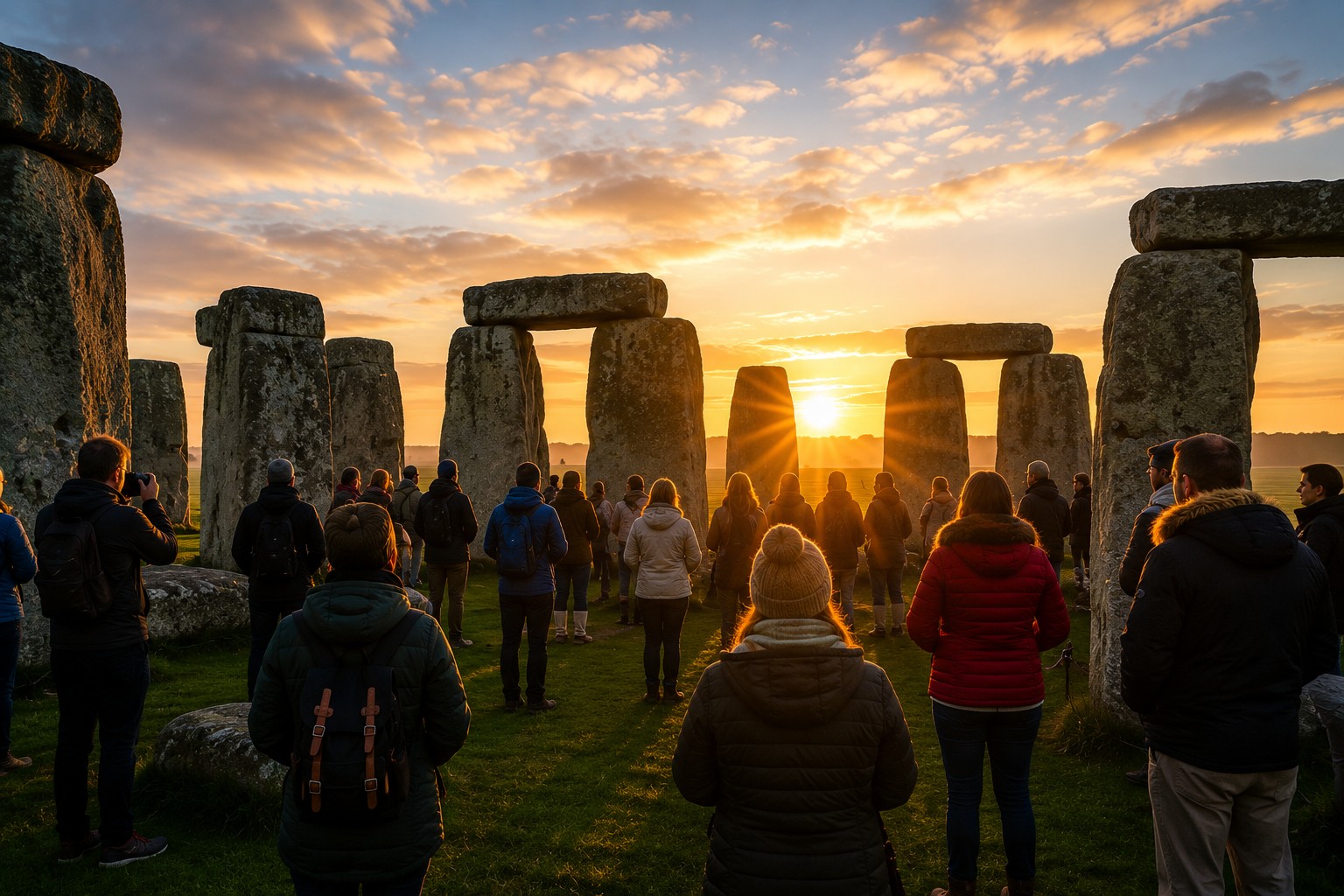
Sunrise Inner Circle access allows visitors to experience Stonehenge from inside the restricted area during one of the most atmospheric times of day
🔒 What About Stonehenge Inner Circle Sunrise Access?
For many visitors, a standard sunrise tour already feels special.
However, some travellers want an experience that goes even further.
This is where Stonehenge Inner Circle access becomes particularly relevant.
Unlike standard visits, Inner Circle experiences allow visitors to enter the restricted area close to the stones outside normal public opening hours.
Visitor numbers remain limited.
Groups are significantly smaller.
The atmosphere often feels much more personal.
Many experienced Stonehenge visitors regard sunrise Inner Circle access as the most memorable way to experience the monument.
It combines the atmosphere of sunrise with the exclusivity of special access, creating a genuinely unique experience.
Instead of viewing the stones from the normal visitor pathway, participants can stand much closer and experience the monument from a perspective unavailable during regular opening hours.
Benefits often include:
🔒 Smaller visitor groups
🔒 Greater sense of exclusivity
🔒 Exceptional photography opportunities
🔒 Quieter surroundings
🔒 Special access close to the stones
Because visitor numbers remain strictly controlled, these sessions often feel dramatically different from standard visiting periods.
Travellers comparing special-access periods may also benefit from understanding how Stonehenge Inner Circle dates vary throughout the year before choosing between sunrise and sunset access.
Many travellers begin planning their visit by reviewing available Inner Circle dates before making broader travel arrangements.
The best place to start is the Stonehenge Inner Circle Access Calendar, which helps visitors check available sunrise and sunset access dates before finalising their itinerary.
Visitors interested in understanding how special-access visits work may wish to explore Stonehenge Inner Circle access in more detail.
Travellers comparing premium experiences may also find it useful to understand whether Inner Circle access is worth the additional cost.
Because availability is limited, many visitors check dates before arranging accommodation, rail tickets or flights.
🔒 Thinking About Sunrise Inner Circle Access?
For many experienced visitors, Inner Circle sunrise access represents the most memorable way to experience Stonehenge. Combining the atmosphere of dawn with exclusive access close to the stones creates an experience that feels dramatically different from a standard visit.
🌄 Sunrise Access → Experience Stonehenge at its quietest and most atmospheric
🔒 Closer To The Stones → Enter the restricted area during special-access sessions
📸 Exceptional Photography → Capture the monument in some of the best lighting conditions of the day
📅 Limited Availability → Popular dates often sell out months in advance
Many sunrise Inner Circle sessions sell out well before the travel season begins. Reviewing the official calendar before arranging accommodation, transport or flights can help you secure the dates that best match your plans.
📅 Check Stonehenge Inner Circle Dates
View upcoming sunrise and sunset access sessions and start planning one of the most exclusive Stonehenge experiences available.
Many sunrise Inner Circle sessions sell out well in advance. Reviewing the official Stonehenge Inner Circle Access Calendar can help you identify the best available dates and secure your preferred experience before availability becomes limited.
Visitors choosing between sunrise and sunset sessions may also benefit from understanding which periods of the year offer the best Inner Circle experiences.
Travellers ready to compare available premium tours may also wish to review the most popular Stonehenge Inner Circle experiences currently operating from London.
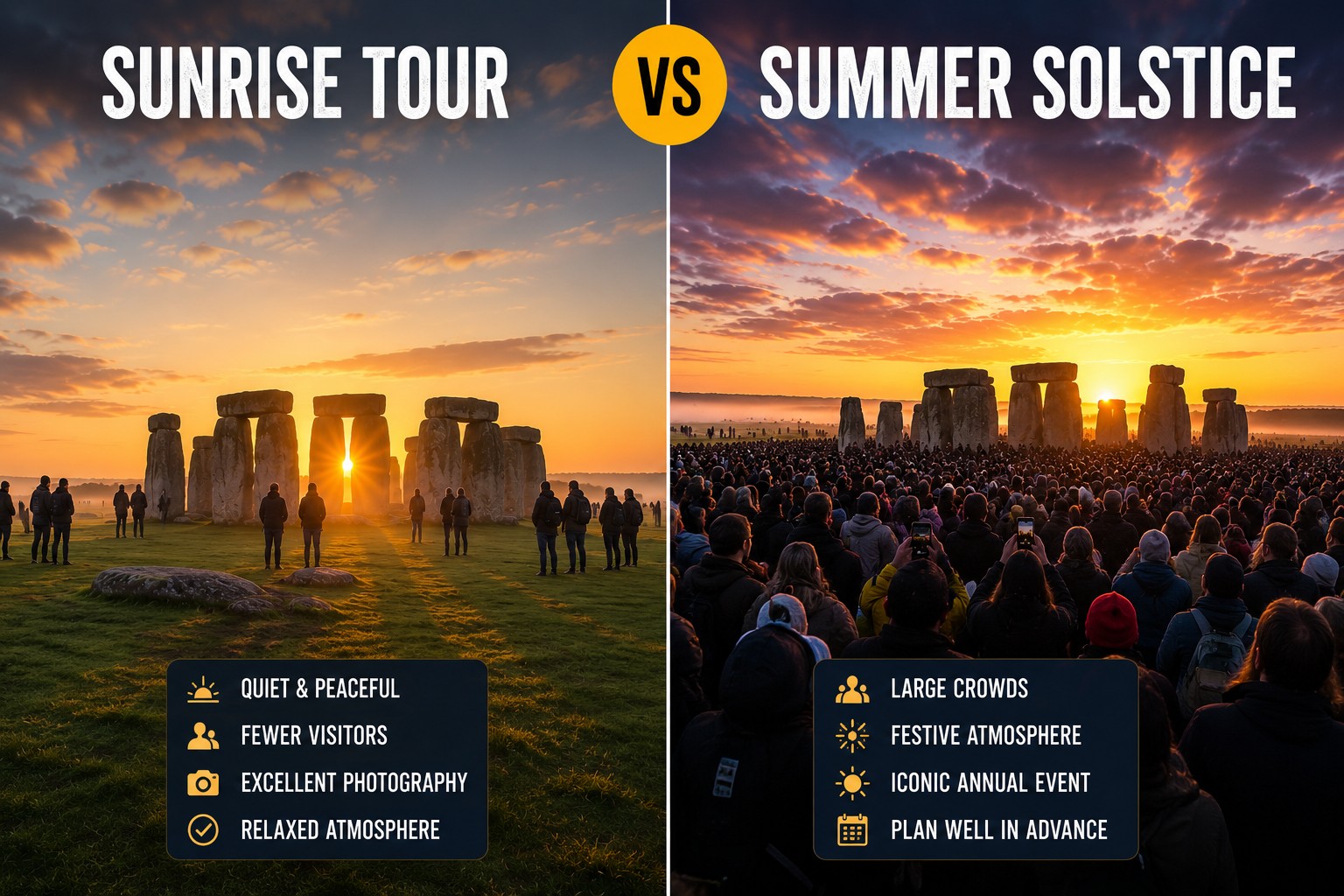
Standard sunrise tours offer a quieter and more reflective experience, while Summer Solstice sunrise attracts thousands of visitors for one of Britain’s most iconic annual events
☀️ Sunrise Tours vs Summer Solstice Sunrise
Although both experiences involve watching the sun rise over Stonehenge, they feel completely different.
A typical sunrise tour is generally peaceful.
Visitor numbers are relatively low.
The atmosphere tends to be reflective and personal.
Summer Solstice sunrise is something else entirely.
Thousands of visitors gather to celebrate the longest day of the year.
The atmosphere becomes part cultural event, part celebration and part bucket-list travel experience.
A standard sunrise tour focuses on tranquillity.
Summer Solstice focuses on energy and shared experience.
It is less about quiet reflection and more about being part of a major cultural moment. Visitors who want atmosphere may love it, while those seeking peace may prefer a standard sunrise or Inner Circle session.
Neither is necessarily better.
They simply appeal to different types of travellers.
Visitors interested in attending the annual event may also find it useful to compare dedicated Summer Solstice tour options before making travel plans.
Travellers comparing the two experiences may also wish to explore how Summer Solstice differs from Inner Circle access.
🌱 Responsible Tourism At Sunrise
Whether you choose a sunrise tour, a daytime visit or an Inner Circle experience, responsible tourism plays an important role in protecting one of Britain’s most significant historic landscapes.
Stonehenge is not simply a collection of ancient stones.
It sits within a UNESCO World Heritage Site containing prehistoric monuments, burial mounds and archaeological features that have survived for thousands of years.
Every visitor plays a part in preserving this landscape for future generations.
Visitors can help by:
✅ Staying on designated pathways
✅ Respecting barriers and site regulations
✅ Following steward guidance
✅ Taking litter home
✅ Supporting local businesses
✅ Respecting archaeological features
Choosing organised transport can also help reduce the number of individual vehicles travelling to the site and minimise congestion around the World Heritage landscape.
Shared transport can be particularly beneficial during busy seasonal periods when visitor demand is highest.
Responsible tourism is not simply about protecting the stones themselves but also safeguarding the wider landscape that gives Stonehenge much of its meaning and significance.
Visitors interested in exploring Stonehenge as part of wider South West England journeys may also enjoy discovering some of the region’s other historic and cultural highlights.
🏆 Is Sunrise Worth It?
For readers looking for a quick answer, the table below summarises the strengths and limitations of a sunrise visit.
| Factor | Rating |
|---|---|
| Atmosphere | ⭐⭐⭐⭐⭐ |
| Photography | ⭐⭐⭐⭐⭐ |
| Crowds | ⭐⭐⭐⭐⭐ |
| Uniqueness | ⭐⭐⭐⭐⭐ |
| Convenience | ⭐⭐ |
| Family Friendliness | ⭐⭐⭐ |
| Overall Experience | ⭐⭐⭐⭐⭐ |
🌄 Choose sunrise if you want peace, atmosphere, softer light and fewer crowds.
🔒 Choose Inner Circle sunrise if you want the most exclusive version of the experience.
☀️ Choose Summer Solstice sunrise if you want a major annual gathering rather than a quiet visit.
🌄 Sunrise excels for atmosphere, photography and memorable travel experiences.
📸 If capturing Stonehenge at its most atmospheric is important to you, sunrise remains one of the strongest options available.
⏰ The only significant drawback is the early start, which may not suit every traveller.
🎯 Who Should Choose A Sunrise Tour?
Sunrise tours are not necessarily right for everyone.
However, they can be exceptionally rewarding for the right type of traveller.
Choose Sunrise If:
✅ You enjoy quieter experiences
✅ Photography is important to you
✅ You prefer fewer crowds
✅ You enjoy memorable travel moments
✅ You appreciate atmosphere and scenery
✅ You enjoy seeing places at unusual times of day
✅ You want a stronger emotional connection with Stonehenge
✅ You want to experience Stonehenge at one of its most atmospheric moments
Sunrise May Not Be For You If:
❌ You strongly dislike early mornings
❌ Convenience matters more than atmosphere
❌ You prefer flexible schedules
❌ You are travelling with very young children
❌ You would rather maximise sleep than experience sunrise
For many travellers, the decision ultimately comes down to one simple question:
Would you rather have a lie-in or a unique memory?
🌄 Sunrise offers one of the most atmospheric ways to experience Stonehenge.
📸 Photographers often regard it as one of the best times of day to visit.
🔒 For an even more exclusive experience, many visitors upgrade to sunrise Inner Circle access.
There is no universally perfect time to visit Stonehenge—but sunrise is often the option travellers remember most.
🏆 Final Verdict
So, is Stonehenge at sunrise worth the early start?
For many visitors, the answer is yes.
The alarm clock may not be enjoyable.
The journey may begin while most people are still asleep.
Yet the rewards can be substantial.
The atmosphere feels different.
The landscape feels quieter.
The lighting often creates exceptional photography opportunities.
Most importantly, sunrise transforms Stonehenge from a sightseeing stop into an experience.
That does not mean it is the right choice for everyone.
Travellers who prioritise convenience may prefer a daytime or sunset visit.
Readers still comparing the two edge-of-day experiences may also find it useful to explore whether Stonehenge sunrise or sunset is the better time to visit.
Others may decide that Inner Circle access offers the strongest overall experience.
While sunrise is not the most convenient way to visit Stonehenge, convenience is rarely the reason people remember great travel experiences.
However, for visitors who value atmosphere, photography and memorable travel moments, sunrise remains one of the most rewarding ways to experience Stonehenge.
Many travellers find that the early alarm is forgotten the moment the sun begins to rise over the stones.
🌄 Sunrise generally offers softer light, longer shadows and cleaner compositions.
🌇 Sunset often delivers richer colours and more dramatic skies.
🔒 Inner Circle Sunrise Access combines exceptional lighting with exclusive access close to the stones, making it one of the most sought-after Stonehenge experiences available.
❓ Frequently Asked Questions
Is Stonehenge worth visiting at sunrise?
Many visitors consider sunrise one of the most memorable ways to experience Stonehenge thanks to the quieter atmosphere, softer light and reduced visitor numbers.
Are sunrise tours better than daytime tours?
They offer a different experience rather than a better one. Sunrise generally provides a calmer atmosphere and stronger photography opportunities.
Is sunrise or sunset better at Stonehenge?
Both are excellent. Sunrise is often preferred for tranquillity and photography, while sunset is popular for dramatic skies and more relaxed timings.
Are sunrise tours crowded?
Generally not. Earlier departures naturally reduce visitor numbers compared with standard daytime visits.
Is sunrise good for photography?
Yes. Softer light, longer shadows and occasional morning mist make sunrise one of the most popular times for photography.
Can you visit Stonehenge Inner Circle at sunrise?
Yes. Special-access Inner Circle sunrise sessions are available on selected dates throughout the year.
Do sunrise Inner Circle tours sell out?
Often, yes. Popular spring and summer dates can sell out well in advance.
Is Summer Solstice sunrise the same as a sunrise tour?
No. Summer Solstice involves thousands of visitors and a festival-like atmosphere, while standard sunrise tours are typically quieter and more reflective.
🔗 Continue Planning Your Stonehenge Visit
🌅 Best Time to Visit Stonehenge: Opening Hours, Crowds & Tips (2026)
📅 Best Time to Visit Stonehenge (Month-by-Month Guide)
🌇 Stonehenge Afternoon Tours from London (2026 Guide)
⚖️ Stonehenge Morning vs Afternoon vs Sunset: Which Time Should You Visit? (2026 Guide)
📸 Stonehenge Photography Tips: Best Times & Viewpoints (2026 Guide)
🏛 Stonehenge Inner Circle Access: Everything You Need to Know
🔒 Stonehenge Inner Circle Access Calendar (2026–2027)
🌄 Best Time to Visit Stonehenge Inner Circle (2026 Guide)
🌅 Stonehenge Summer Solstice Tours from London (2026 Guide)
⚖️ Stonehenge Summer Solstice vs Inner Circle: Which Experience Is Better? (2026 Guide)
🌇 Stonehenge Sunset vs Inner Circle Tours: Which Experience Is Better? (2026 Guide)
🌄 Ready To Experience Stonehenge At Sunrise?
If this guide has shown anything, it is that sunrise offers a very different perspective on Stonehenge. Fewer crowds, softer light and a unique atmosphere combine to create an experience many travellers remember long after their visit has ended.
🌄 Sunrise Tours → Peaceful surroundings and unforgettable morning views
🌇 Sunset Experiences → Dramatic skies and golden-hour photography
☀️ Summer Solstice → Witness one of Britain’s most iconic annual events
🔒 Inner Circle Access → Enjoy exclusive access close to the ancient stones
Whether you’re considering a peaceful sunrise tour, a dramatic sunset visit, Summer Solstice celebrations or premium Inner Circle access, comparing available options can help you choose the Stonehenge experience that best matches your interests, schedule and travel style.
🌄 Explore Stonehenge Sunrise Tours
Compare sunrise tours, sunset experiences, Summer Solstice events and premium Inner Circle access options in one place.